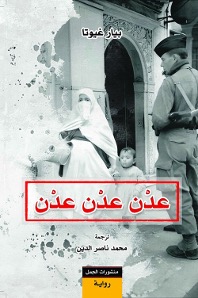
First Arabic translation of Pierre Guyotat's work
The Association supported the first translation of a work by Pierre Guyotat into Arabic, by the Lebanese translator and poet Mohamad Nassereddine.
The Association supported the first translation of a work by Pierre Guyotat into Arabic, by the Lebanese translator and poet Mohamad Nassereddine.
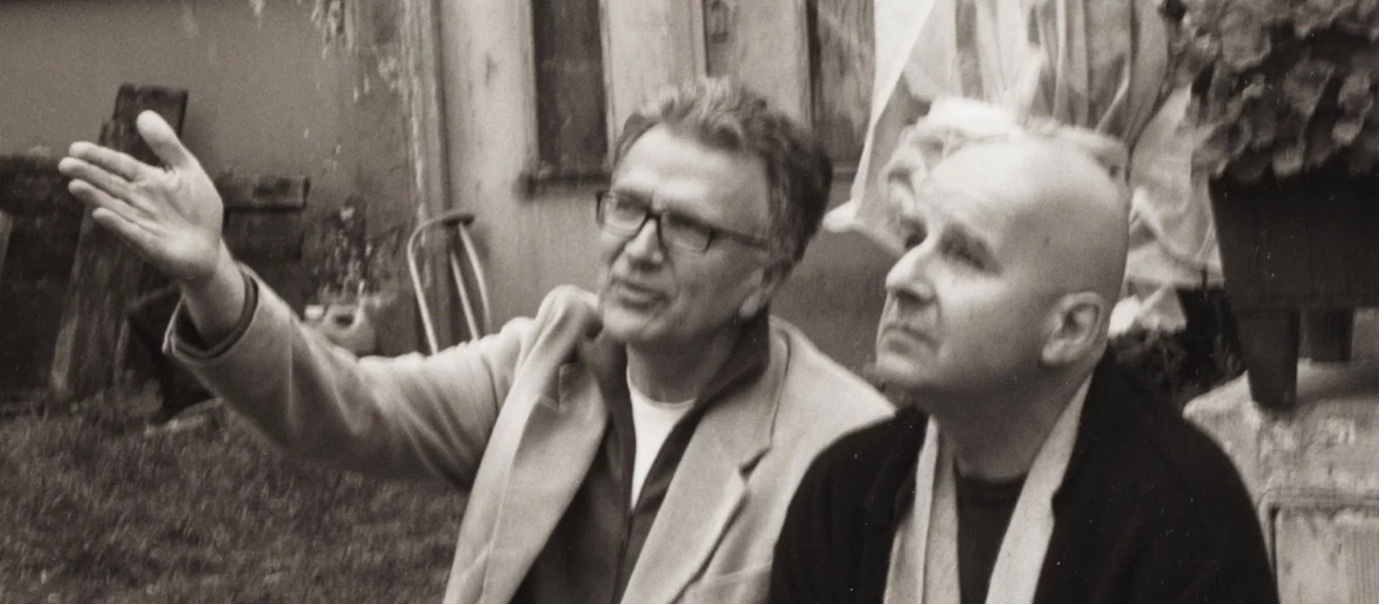
Pierre Guyotat, with the Centre Pompidou – Musée national d'art moderne and the Cité internationale de la langue française
In partnership wIth the Musée national d’art moderne – Centre Pompidou, the Cité internationale de la langue française and the Université Paris-VIII Saint-Denis.
Developed in dialogue with the Association Pierre Guyotat and architect Patrick Bouchain, this project unfolded across two complementary exhibitions at the Cité internationale de la langue française and the Centre Pompidou.
At the Cité internationale de la langue française, the installation Leçons sur la langue française presented recordings of lectures Guyotat gave at the Université Paris-VIII between 2001 and 2004. At the Centre Pompidou, Clic-Clac showcased the Régis Guyotat donation, several hundred drawings by the writer alongside objects from his working environment.
The project was extended with the publication of La parole visible, a book conceived by Patrick Bouchain bringing together contributions from Claude Arnaud, Stephen Barber, Miquel Barceló, Juliette Blightman, Bernard Blistène, Paul Buck, Daniel Buren, Pierre Chopinaud, Michael Dean, Simone Fattal, Colette Fellous, Michaël Ferrier, Maximilian Gillessen, Régis Guyotat, Yannick Haenel, Jacques Henric, Xavier Hufkens, Emmanuelle Huynh, Niranjani Iyer, Colette Kerber, Selma Laghmara, Michèle Lamy, Jack Lang, Bertrand Leclair, Mara McCarthy, Paul McCarthy, Frank Madlener, Pierre-Alexandre Mateos and Charles Teyssou, Bernardo Montet, Jean-Luc Moulène, Gérard Nguyen Van Khan, Thierry Thieu Niang, Stanislas Nordey, Chiara Parisi, Philippe Parreno, Emmanuel Pierrat, Jean-Michel Rabaté, Bruno Racine, Ariana Reines, Andy Robert, Tiphaine Samoyault, Devika Singh, and Noura Wedell.
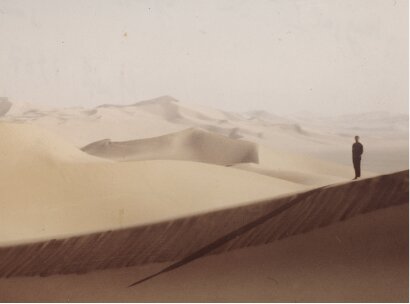
International Colloquium "Pierre Guyotat and Algeria"
Dunes à Gassi Tuil (Algérie) © D.R.
Organized in partnership with the Institut du monde arabe, the Bibliothèque nationale de France and the Université Sorbonne Nouvelle (UMR THALIM).
The international symposium "Pierre Guyotat and Algeria" was the first major scholarly gathering devoted to the author's work since his death. Researchers, writers, and artists from France, Algeria, and elsewhere came together to explore the deep imprint of Algerian history on Guyotat's writing, tracing his experience of the war of independence, his later returns to Algeria, and the place the country holds throughout his work as a point where political, intimate, and literary concerns converge.
The proceedings of the conference were published in January 2024, edited and introduced by Catherine Brun, Guillaume Fau, and Donatien Grau, with prefaces by Laurence Engel and Jack Lang, and contributions from Amina Azza Bekkat, Donatien Grau, Ferroudja Allouache, Gérard Nguyen Van Khan, Noura Wedell, Karima Lazali, Denis Hollier, Catherine Brun, Todd Shepard, Nadia Sebkhi, Philippe Roger, and Tiphaine Samoyault.
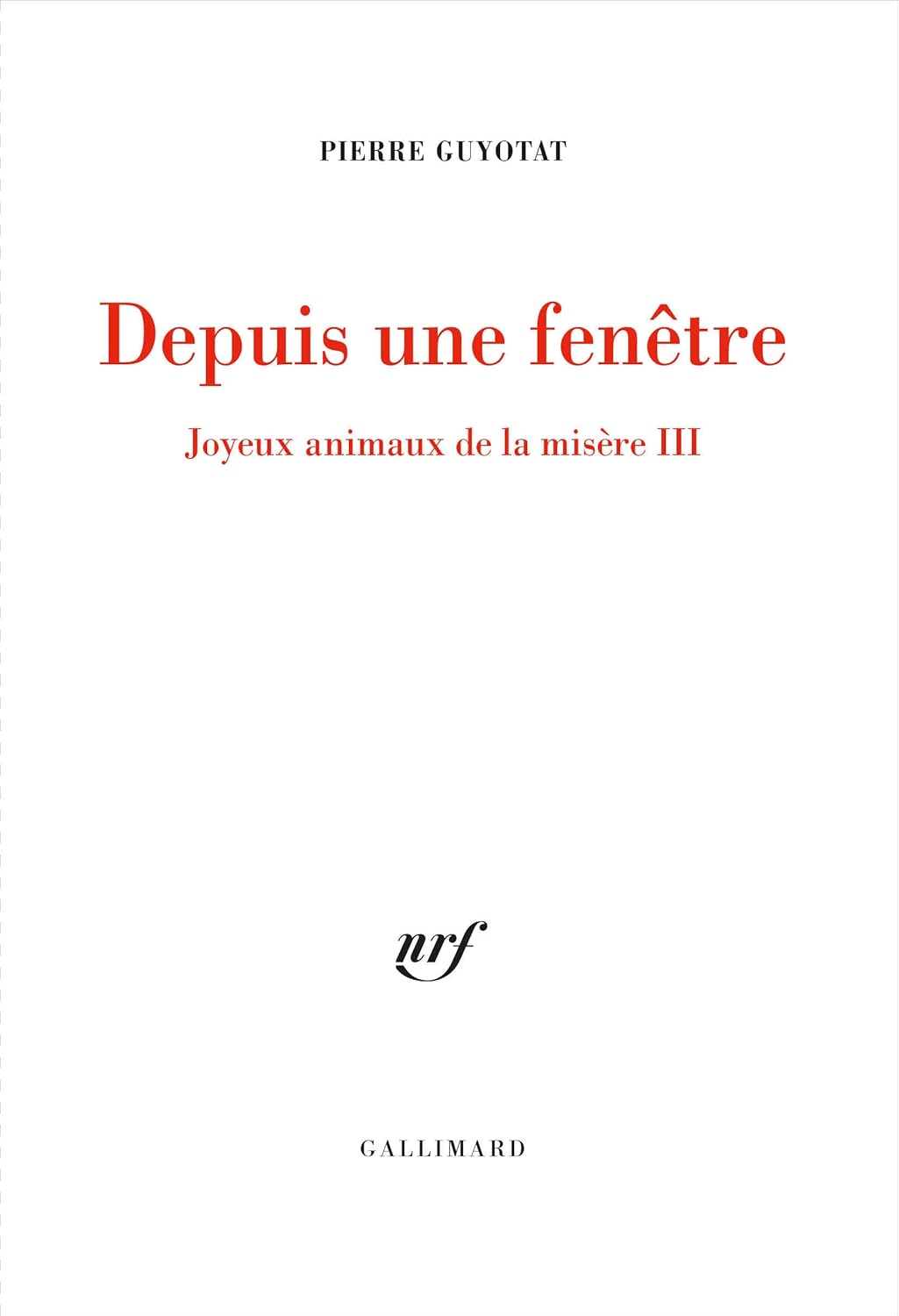
Reading of "Depuis une fenêtre" by Abd Al Malik
In partnership with the Columbia Global Centers.
The **Association Pierre Guyotat** organized a performed reading of Depuis une fenêtre by **Abd al-Malik**. The first novel published after Pierre Guyotat's death, the book, released by Gallimard in 2022, forms the third part of Joyeux animaux de la misère. Through this reading, Abd al-Malik gave voice to a fiction in which Guyotat's lifelong exploration of the violence history inflicts on language and bodies finds its fullest expression.
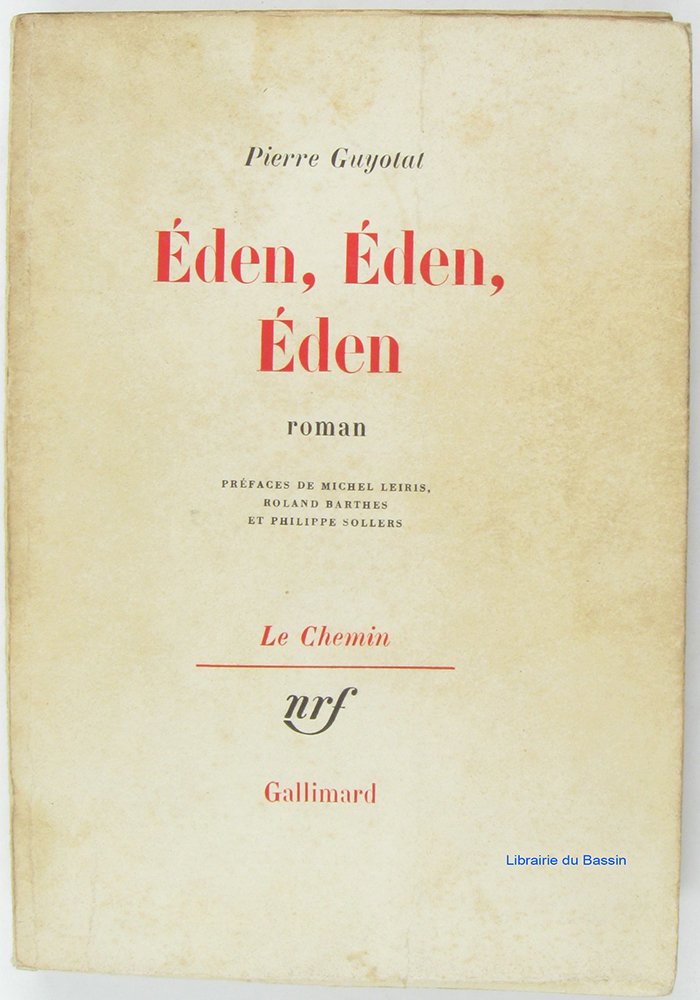
Eden 50 — "Éden, Éden, Éden" at fifty
In partnership with an international network of fifty institutions, cultural venues, artists, and readers.
To mark the fiftieth anniversary of Éden, Éden, Éden, the Association Pierre Guyotat coordinated fifty simultaneous readings held in France and around the world. Each partner venue shaped its own event, in person or online, in whatever format suited its context.
The anniversary brought together artists, writers, institutions, and readers around a work that remains both foundational and fiercely contested: prefaced by Michel Leiris, Roland Barthes, and Philippe Sollers, it was subject to a triple ban upon its release in 1970, prompting an international petition signed by Pier Paolo Pasolini, Jean-Paul Sartre, Pierre Boulez, Joseph Beuys, Jean Genet, Joseph Kessel, Maurice Blanchot, Max Ernst, Italo Calvino, Simone de Beauvoir, and Nathalie Sarraute.
Readings took place in French and in the languages of existing translations, and the event also gave rise to new ones.